





May 23, 2014
Bottom Line 049: Beyonce, Bioqueens, and Polygamists
Episode 49! Beyonce, Bioqueens, open relationships and more!
Bottom Line Beyonce The BioQueen And Polyamorous Relations by Edugaytion
Labels:
Podcast

May 22, 2014
Rumiko Takahashi's Accepting Era
Rumiko Takahashi’s InuYasha
is a manga and anime set during the Sengoku Era of Japan, from roughly 1467
until 1573 (some of you history buffs might know this also as The Warring
States period), written from 1996-2008. This is interesting from the standpoint
of the history, in that Rumiko did this purposely so she could explore more violent
ideas and themes in the safer space of history rather than the present. Secondly,
it is once again interesting to view the concepts of acceptance in this manga/show that is made for children.
One concept is that the majority of her characters aren't
hyper sexualized. In fact, she has many depictions of strong and courageous
women. The main character, Kagome, stumbles into the past era through a magical
well, and does not have much experience or anything in fighting or anything of
the sort. After finding out she was the reincarnation of a priestess that lived
at the time, she took up the quest of traveling with InuYasha and company to
recover the jewel that the main villain, Naraku, stole. Through every episode
she became stronger as a character and more able to stand up for herself and
what she thought was right. Another main
character, Sango, comes from a family of demon hunters who are predominantly
male. After Naraku, had killed her family and kidnapped her brother, she
stopped at nothing to fight her way along to defeat Naraku.
 |
| Takahashi's notes on Kagome |
Just as the women are not thrust into stereotypical gender
roles, they are also not drawn in a way where they are made out to be sexual
objects. The worst of the objectification is
Labels:
Gaming
May 21, 2014
A Glimpse Into the Life of a Disabled Gay Man

As most of us know, the LGBT community is diverse, but there’s a smaller part of the community that is seldom thought about: the people that are wheelchair bound that are part of the LGBT community. About six years ago I met my best friend; he came out to me as gay two years later. He has been in a wheelchair since he was 8 years old due to a neuromuscular disease that causes muscular degeneration. I had many questions at first, because I've always thought of him as a person and I never focused on the fact that he’s in a wheelchair.
We were
in high school together, so of course we talked about guys and did all the
normal stuff girls do with their gay best friends. There was a straight guy he
liked, but things didn't pan out. Things between my friend and I were very
emotional for a while after we talked about how things didn't go well with the
guy he liked. The more we talked, the more he let me in. We talked about how
difficult even meeting a man would be, let alone having a sex life. The most
difficult parts of the conversations we would have were about him being unable
to take care of kids on his own because of his inability to hold anything over
a certain weight and diminished strength in his hands.
Last July
he met a guy through a dating website, and
Labels:
Opinion
May 9, 2014
Is the LGBT Community Being Too Sensitive?

In response to the outcry against the exclusion of same sex relationships and marriages in their upcoming title "Tomodachi Life", Nintendo has issued an apology to the LGBT community.
"We apologize for disappointing many people by failing to include same-sex relationships in Tomodachi Life ...," the Japanese company said in a news release. "At Nintendo, dedication has always meant going beyond the games to promote a sense of community, and to share a spirit of fun and joy. We are committed to advancing our longtime company values of fun and entertainment for everyone."
Many on this side of argument believe this to be a step in the right direction toward the fight for equal representation in the media, and ultimately for equality. However, as is the case with just about any social argument, there have been naysayers along the way. Some people, from both the heterosexual and LGBT communities have criticized protesters for being too sensitive or too serious in light of this recent Nintendo scandal. Founder and Editor in Chief of Edugaytion, Johnathan Gibbs, responds in this video:
May 3, 2014
Mike Epps vs Kevin Hart and the Homophobic Message You Might Have Missed

Recently, comedian Mike Epps was interviewed on the Dede in the Morning show, based out of Dallas (KKDA-FM) where he named Kevin Hart as one of the most overrated comedians. And while that wreckless read may be what most of the world is focusing on at the moment, many people might have missed the shade that accompanied Epps' words. When asked if he would ever kiss a man in a movie, for money, Epps vehemently answers "No." Check out the six minute clip from the show below for yourself at 3:42 he makes the statement.
3:25 mark
Host:"Ok so let me ask you this Mike because you're talking about stretching yourself as an actor and everything... Is there a role
May 2, 2014
Why do Gay Guys Like Fashion?

I heard an interesting story from a recent acquaintance at dinner last night. In it, the storyteller, a heterosexual male, told us about how when he and his best friend (also a heterosexual male) go out, they get hit on by gay guys. The reason? They're well-groomed and dressed. And, while I must admit that I thought he might be on our team when I first met him, I came to the realization that my way of thinking fell into the same stereotyped brand that accompanies lazy thinking.
For all superficial intents and purposes, I did think that my new acquaintance was a gay man. My gaydar had been tuned to picking up optimal homosexual levels of masculinity, self awareness, grooming habits, and fashion sense. Surely, because he had clear skin, was small-framed, in reasonable shape and knew how to dress, he had to be gay, right? Wrong! And the craziest part of all of this is the simple fact that I, myself, do not fit into this category of stereotyped "gay thinking." Why was I expecting anything differently from him? Why was I feeding into the stereotype?
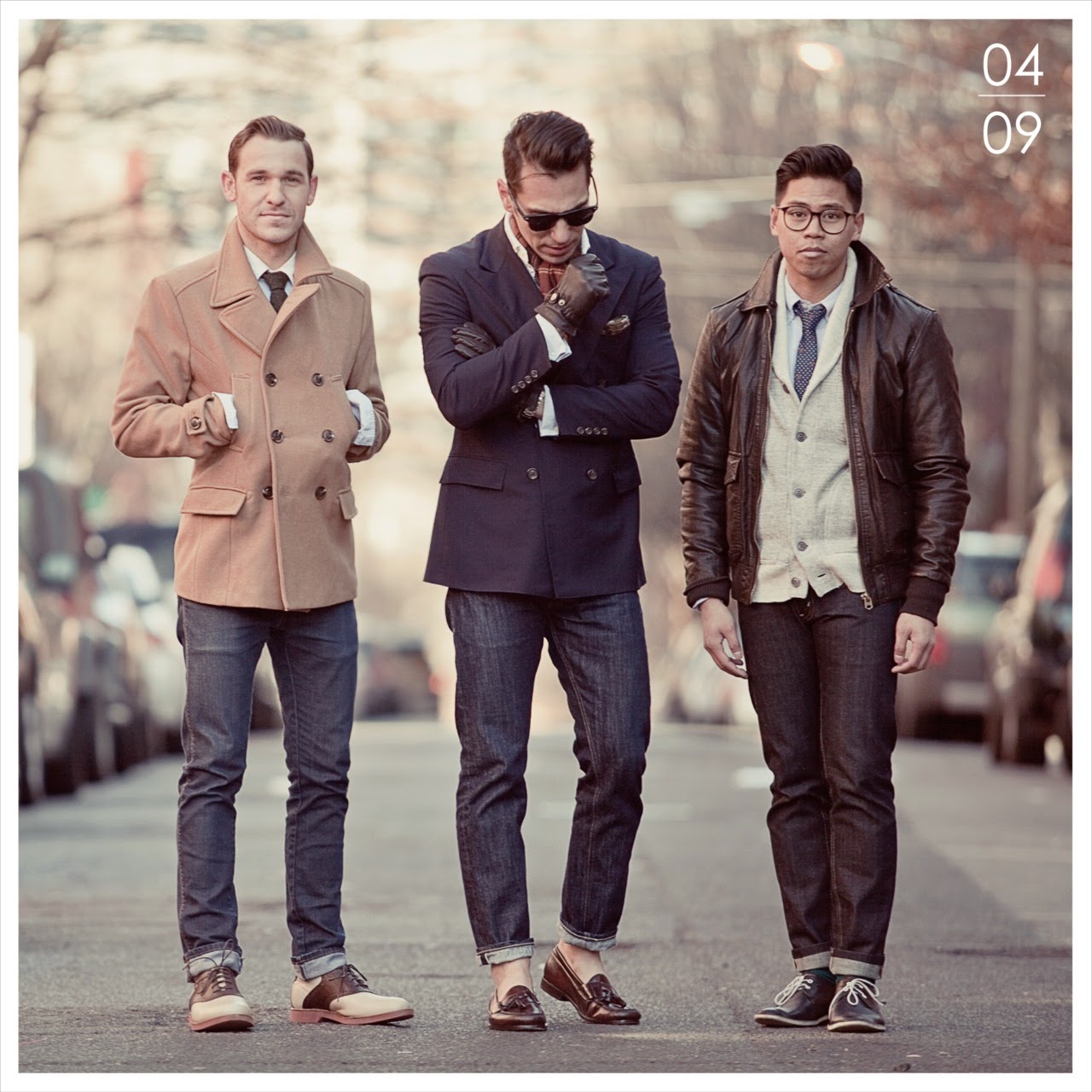
Could it be that gay guys really do like fashion? When I survey my closest acquaintances, that is the gay groups of people I hang with the most, which number in the hundreds, I can confidently say that the stereotype is a myth. That's not to say that NO gay people like fashion. The media will definitely tell you otherwise, but how is it that this stereotype has latched onto our community in the way it has? Could there be truth behind not only the fashion stereotype, but the well-groomed gay as well?
There has to be a happy medium. There has to be some reason why appearance, whether it be through clothes or physical body image, are such a "thing" in our community. I've been
Labels:
Opinion
Subscribe to:
Posts (Atom)


