
I’m quite sure many people that have seen anime have seen,
or at least heard of Ouran High School Host Club. For those of you that haven’t, or
haven’t noticed the beauty it presents, I’m going to break it down for you
right now.

Yes it’s a typical slice-of-life anime. Yes it’s probably aimed toward a younger audience. I’m not going to summarize it here, there are many websites for that. But what you might not have noticed, on your first binge of watching, are the statements this show makes regarding trans* individuals.
The anime stars a boyish character by the name of Haruhi
Fujioka, who in the beginning of the show, looks like this (see below right). Her appearance
follows that of a typical teenage boy. “When first introduced in the anime, she
sports a nerdy, boyish look that differs greatly from her middle-school
appearance. When gum gets stuck in her hair just before school begins, she cuts
it short and being unable to afford the expensive Ouran uniform, she wears
shapeless, baggy clothing.” (Ouran Wikia)
She is a student at Ouran academy, traditionally
a school for the very wealthy--she is not very wealthy. When looking for her classroom, she wanders into the host club's club room. Not knowing exactly where she is, and ducking out to take her leave, she ends up breaking a very expensive vase. As a consequence, the other members say she must work off her debt in the club, making the assumption that she is also a boy. They eventually find out that she is a girl, but they keep this a secret. She able to masterfully show off as a boy to their audience (see above, in the red kimono), and she becomes one of the most requested hosts within the club as a result.
a school for the very wealthy--she is not very wealthy. When looking for her classroom, she wanders into the host club's club room. Not knowing exactly where she is, and ducking out to take her leave, she ends up breaking a very expensive vase. As a consequence, the other members say she must work off her debt in the club, making the assumption that she is also a boy. They eventually find out that she is a girl, but they keep this a secret. She able to masterfully show off as a boy to their audience (see above, in the red kimono), and she becomes one of the most requested hosts within the club as a result.
 |
| Middle school ||| High school |
I think that this is very good to portray in a show that is meant for a younger audience. It shows that it doesn't matter
what gender you are or you present as, you’ll still be able to have friends and
people that value and care about you. Her club mates treat her same and keep
her secret only to keep their club going but otherwise value her being a part
of their friendships. It shows the trans community in a very
positive light. Furthermore, there is also the character of her father.
 |
| Ranka/Ryoji as depicted in the live-action drama |
 |
| Ranka/Ryoji as depecited in the anime |
Showing younger viewers how being trans* or presenting as a different gender is perfectly
acceptable is very important; especially in a society like Japan's where gay rights are still not wholly accepted (this is due to people not having
the confidence to speak for their rights. Which comes from cyclical societal pressures). However, as people are gaining the confidence to fight for what they believe is
right, I think this anime is really before its time! I would hope
that its viewers that might have seen this as young teenagers are now the
ones that are pushing for equal rights. Across the world, trans* acceptance is something that still needs work--sometimes even within the LGBT community. It's not easy, but as more and more media are produced that will show characters and people in this kind of positive light, a lot of the stigma and fear will begin to dissipate.
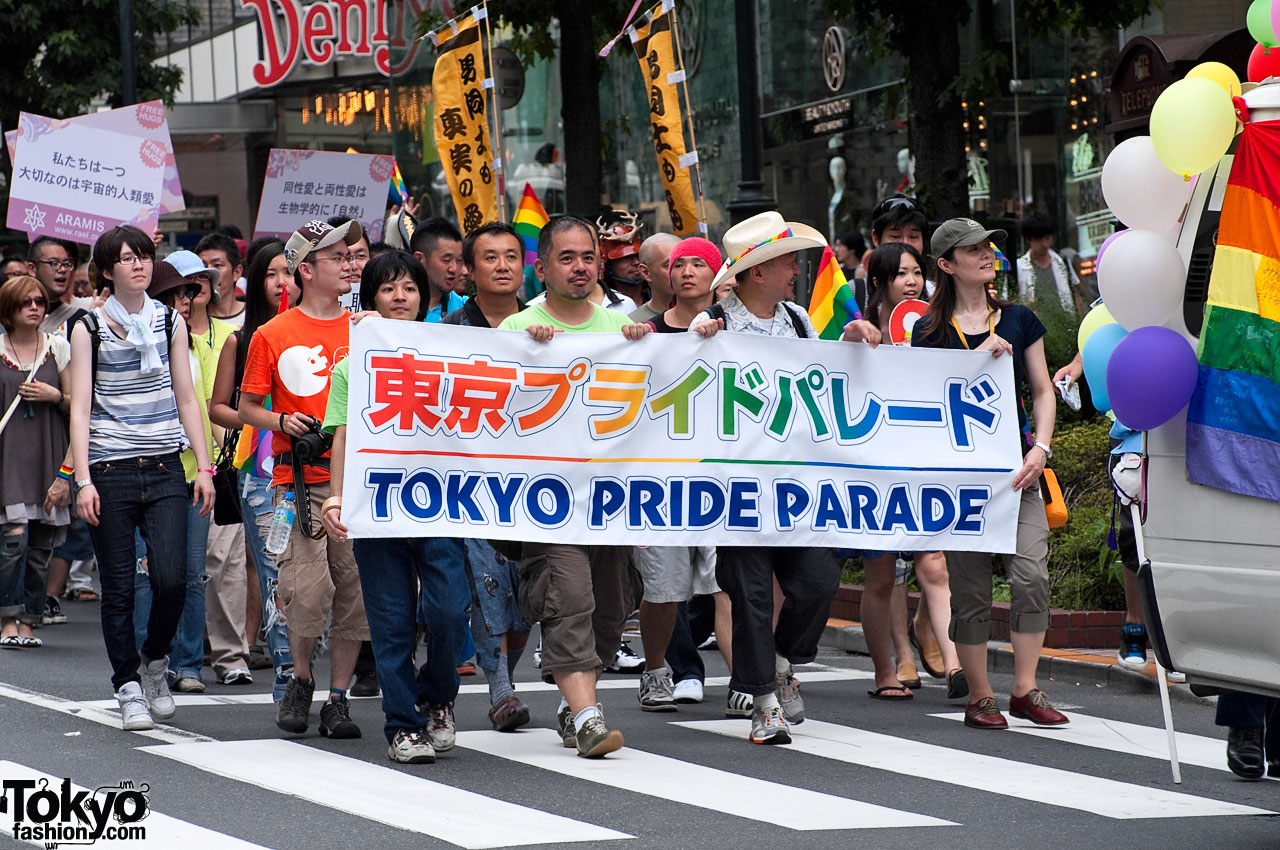 |
| From the 2013 Pride Parade in Tokyo |
Kiss kiss fall in love, y'all.


